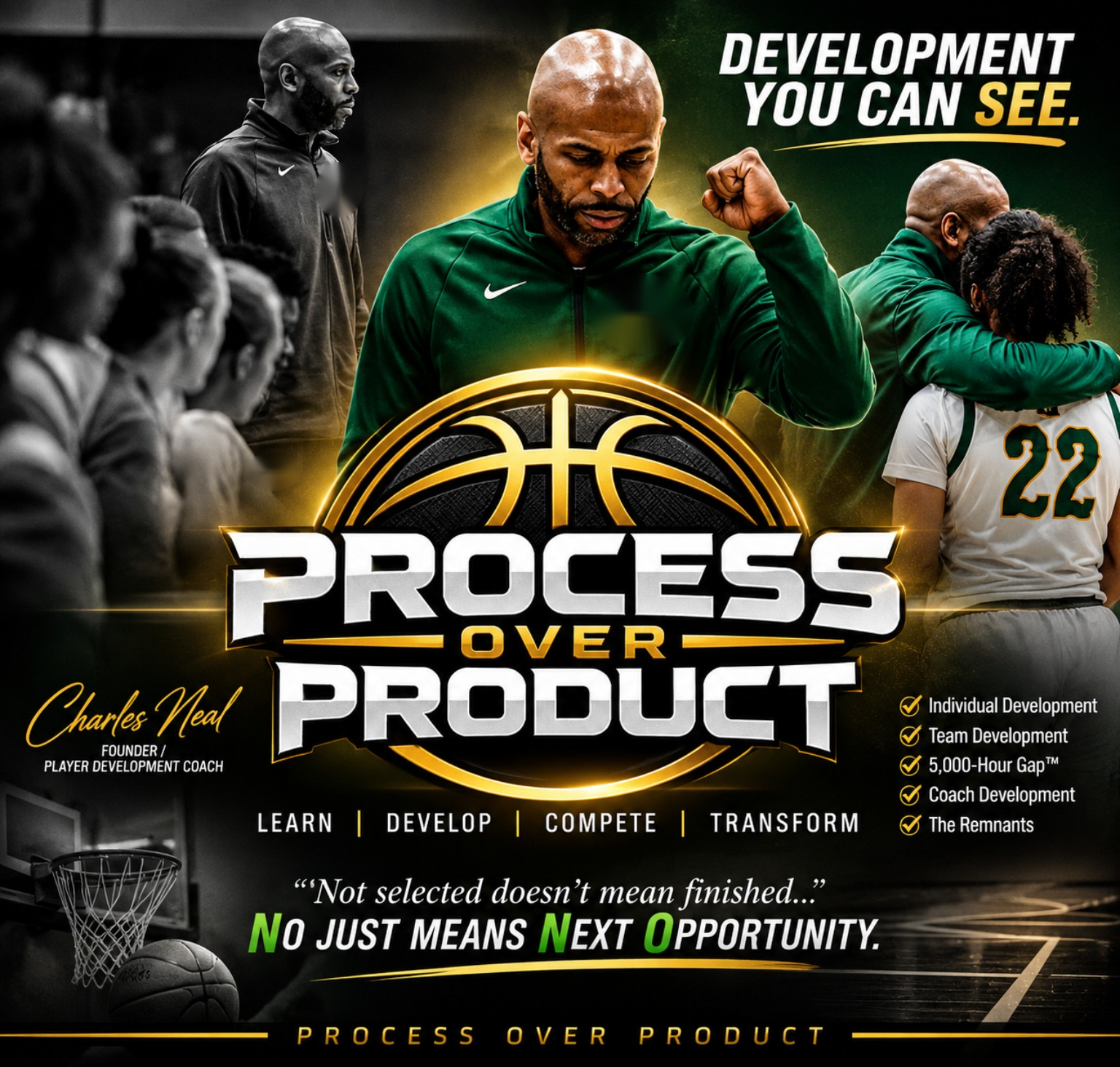
Basketball has been part of Charles Neal's life from the beginning. His father played at Oregon State University, was drafted by the Portland Trail Blazers in 1975, and later played professionally in the Philippines, where Charles spent part of his early childhood. More than the career itself, Charles was shaped by watching his father simplify the game, make learning enjoyable, and earn people's respect through both basketball and character.
Over more than 20 years in player development, Charles has worked with athletes from youth through the professional level. His experience across playing, coaching, physical development and international basketball helped shape a biomechanics-first approach built around stance, balance, footwork, movement quality, body control and long-term athlete development.
Charles describes himself as a basketball choreographer because development is about more than what one player can do with the ball. It is about understanding how all ten players on the floor relate to one another—spacing, timing, movement, communication, decision-making, reactions and adjustments. The goal is to develop athletes who understand the game deeply enough to communicate within it, create advantages and eventually become an extension of the coach on the floor.
That philosophy became Process Over Product: slow and steady development, understanding before imitation, imagination, communication, accountability and the belief that confidence grows as understanding grows. Athletes are given room to learn, make mistakes, ask questions, relearn and restructure concepts, and gradually take ownership of what they are learning.
The environment is demanding without creating unnecessary stress. Communication is mandatory. Energy, effort and focus matter. Respect for teammates, coaches, parents, opponents and officials matters. Character and personal responsibility matter. Development is measured not simply by what an athlete can produce today, but by how much that athlete understands, applies, adapts and grows over time.
For Charles, basketball has always been bigger than basketball. It is a vehicle for teaching, relationships, discipline, community and opportunity—and Process Over Product is the system that grew out of that journey.
FAITH | DISCIPLINE | DEVELOPMENT | COMMUNITY | OPPORTUNITY
We don't compare your athlete to somebody else's athlete. We compare them to who they were when they walked through our doors.
Process Over Product is a development-first basketball system built around one idea: development should be understood, experienced, applied and documented—not assumed because an athlete was busy.
The athlete begins with a baseline. We identify what has already been taught, what is understood, what can be applied, and where the learning cycle is incomplete. From there, we build a Development Map and create environments that move the athlete toward ownership.
Closing the gap begins by understanding separation: where is an athlete now, where are they trying to go, and how intentionally is their time being invested to move from one to the other?
POP connects that investment to purpose, learning, application, feedback and evidence. Skill work, competition, film, basketball IQ, repetition, physical preparation, recovery and independent work can all matter when they serve the athlete's Development Map and reduce the separation between the current baseline and the next level of development.
Separation is not defined by a fixed number of hours. It is revealed through assessment, intentional work, application and evidence. Each reassessment shows what has closed, what remains, and where the next investment should go.
Practices, games, camps and workouts show activity. POP asks what the athlete was trying to learn, what changed, what transferred to competition, and what the evidence says should happen next.
Assessment, Development Map, intentional investment plan, training, film, application, reflection and reassessment—built around the individual athlete.
ASSESS → BUILD → DEVELOP → COMPETE → REASSESS → DOCUMENT. Competition is part of the classroom, not the end of development.
School basketball, club play, private work, film, recovery and offseason development become connected pieces of one intentional journey.
Pre-tryout preparation, offseason development, player assessment and complementary support designed to strengthen—not compete with—school programs.
Daytime 10- or 12-week experiences that combine basketball instruction with learning how to invest developmental time intentionally.
Coaches develop too: planning, observation, intervention, film, feedback, reflection, leadership and evidence of demonstrated practice.
The Remnants is the high-school development pathway for athletes who still want serious development when the opportunity they expected isn't available. It is not a “cut league.” It protects the developmental window.
For 12 weeks, athletes continue to practice, compete, use film, receive feedback, relearn, restructure, reassess and prepare for what comes next.
POP does not begin by labeling an athlete's previous teaching as wrong or calling their patterns “bad habits.” An athlete may have heard a concept, understood part of it, performed it in a drill, or even used it successfully without being able to recognize and reproduce it under pressure.
Our job is to find where learning became incomplete and help the athlete reconnect the concept to understanding, experience and application.
You do not need to know which POP program you need before reaching out. Tell us who the athlete or organization is, what environment you are working in, and what you are trying to develop. We can start there.
For families looking for an individualized developmental relationship—not simply another workout.
Private Player InquiryFor schools, clubs, nonprofits and community organizations interested in player development, offseason programming, hosted programs or coach development.
Partnership InquiryFor homeschool families, parent pods, resource centers and co-ops seeking structured basketball development with an educational component.
Homeschool InquiryFor high-school athletes who want a serious development environment when an expected school-roster opportunity is not available.
Remnants InterestPrivate development, small groups, structured cohorts and year-round guidance.
Pre-tryout, offseason and complementary development that respects the school coach's role.
Development classes that connect physical education, basketball and self-directed learning.
Hosted programs, partnerships, coach development and evidence-based community programming.
No. POP begins with the athlete's own baseline and developmental readiness.
No. POP provides a developmental process and documents evidence of development. Selection and recruiting decisions belong to the organizations making them.
No. It can include assessment, a Development Map, instruction, film, competition reflection, independent-work guidance, investment tracking and reassessment.
No. POP is designed to complement the athlete's existing basketball environments.
We identify the need, decide whether POP is an appropriate fit, and determine the most useful next step. The first conversation is about understanding the situation—not forcing a package.
The first conversation isn't about selling workouts. It's about understanding where the athlete is, where they're trying to go, and whether Process Over Product is the right environment for the journey.
Charles Wesley Neal Jr. • Vancouver, Washington
206-712-3834 • process.over.product12@gmail.com
For athletes under 18, a parent or guardian should make or participate in the initial contact.